Sleep Apnea Oral Appliances

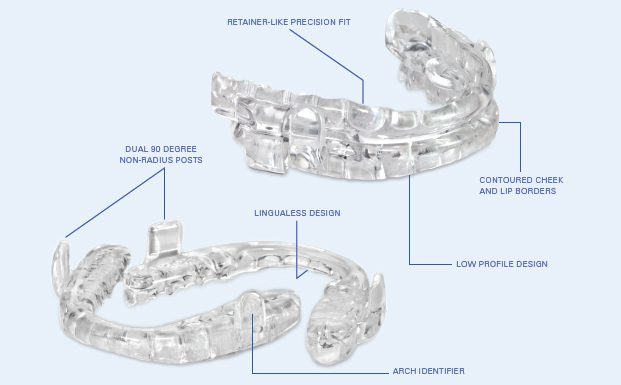
Oral appliance therapy is an effective treatment option for patients with mild to moderate obstructive sleep apnea. Although continuous positive airway pressure (CPAP) is the first line of treatment, many patients prefer oral appliance therapy to CPAP. An oral appliance is a small plastic device that fits in the mouth like a sports guard. Oral appliances prevent the collapse of the tongue and soft tissues in the back of the throat, keeping the airway open during sleep and promoting adequate air intake.
A board-certified sleep medicine physician must first provide a diagnosis and recommend the best treatment option. When an oral appliance is the treatment of choice, a custom-made oral appliance is then fabricated. Ongoing care, including short and long-term, follow up is essential in the treatment of snoring and obstructive sleep apnea. Follow-ups serve to assess the treatment of your sleep disorder, the condition of the appliance, your physical response to your appliance and to ensure that it’s effective and comfortable.

FAQs

What is an oral appliance for sleep apnea?

An oral appliance is a custom-fitted plastic device, similar in appearance to a sports mouthguard or an orthodontic retainer. It is worn in the mouth during sleep to help maintain an open airway by supporting the jaw or tongue.

How does an oral appliance work?

The device is designed to prevent the soft tissues in the back of the throat and the tongue from collapsing. By keeping these tissues stable, the appliance helps ensure a clearer path for air intake while you sleep.

Who typically provides the initial diagnosis for sleep apnea?

A diagnosis for obstructive sleep apnea must be provided by a board-certified sleep medicine physician. Once a diagnosis is made and a treatment plan is recommended, a dentist can then fabricate the custom-made oral appliance.

Is an oral appliance the same thing as a CPAP machine?

No. While both are used to treat sleep apnea, they are different technologies. A CPAP (Continuous Positive Airway Pressure) machine uses a mask and pressurized air, whereas an oral appliance is a small, non-electrical device that fits entirely inside the mouth.

Why are follow-up appointments necessary?

Regular follow-up visits are a standard part of the process to monitor the condition of the appliance and ensure it remains comfortable and fits properly over time. These check-ups allow for adjustments to be made based on your physical response to the device.